Perseid meteor shower 2026: peak time and travel guide
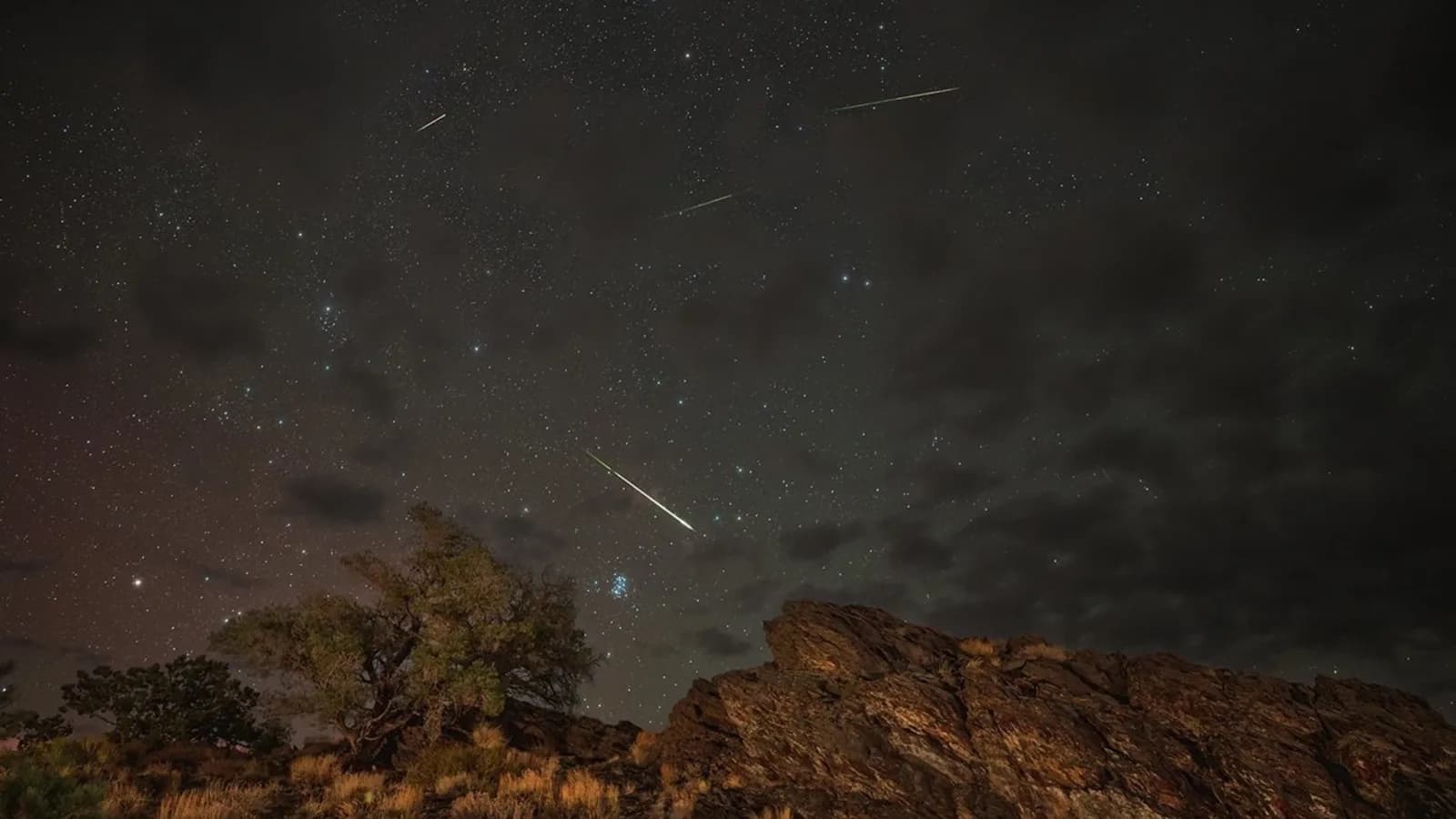
Photo: NASA/Preston Dyches. Cropped and compressed from the NASA source image.
The Perseid meteor shower 2026 peaks on the night of Wednesday, August 12 into Thursday, August 13. The International Meteor Organization puts the strongest predicted window at 02:00 to 04:00 UTC on August 13, inside a broader maximum from 21:00 UTC on August 12 to 09:00 UTC on August 13. A new moon keeps the sky dark.
That does not guarantee a hundred meteors an hour. The familiar rate is a zenithal hourly rate measured under ideal conditions, and the IMO says the normal background activity may be lower in 2026. A clear, legal site with a safe journey home matters more than a famous dark-sky pin under cloud.
Perseids 2026 at a glance
| Detail | 2026 information |
|---|---|
| Active dates | July 17 to August 24 |
| Broad maximum | August 12 at 21:00 UTC to August 13 at 09:00 UTC |
| Strongest predicted window | August 13 at 02:00 to 04:00 UTC |
| Moon | New moon on August 12 |
| Best general region | Mid-northern latitudes |
| First useful viewing time | Around 10pm to 11pm local time at mid-northern latitudes |
| Best direction | A wide view of the darkest part of the sky |
| Special equipment | None for naked-eye viewing |
The timing comes from the International Meteor Organization's 2026 calendar. Check it again near the event because model forecasts can be refined.
When should you watch the Perseid meteor shower in 2026?
Watch from late evening on August 12 until dawn on August 13. The radiant rises through the night, so later hours usually produce more visible meteors. The exact 02:00 to 04:00 UTC maximum favors Europe and eastern North America, but a clear local night is more useful than chasing one clock time under cloud.
| Region | Local plan for August 12 to 13 | Important limitation |
|---|---|---|
| Western and central Europe | Start around 11pm and stay into the early morning | The predicted maximum falls before dawn, but cloud may decide the result |
| Eastern North America | Begin after darkness and continue past midnight | The strongest UTC window falls during the evening of August 12 |
| Western North America | Watch after dark and stay late | The predicted maximum starts before full darkness, but broad activity continues |
| East Asia | Use the local night before dawn on August 13 | The strongest UTC window falls during local daytime |
| Southern Hemisphere | Look before dawn from a dark northern horizon | The radiant stays low, so rates are limited |
| Above about 60 degrees north | Check whether true darkness returns at your latitude | Twilight and radiant geometry can make the display poor |
Do not abandon the trip if August 12 is cloudy. The shower remains active on nearby nights, and the new moon helps throughout the peak period. The nights before the main maximum are usually a better fallback than waiting several nights after it, when activity drops more quickly.
Where is the best place to see the Perseids?
The best place is a site you can legally enter after dark, under a clear sky, away from direct lights, with a safe return route. A remote mountain is not automatically better. Cloud, locked gates, smoke, steep paths, or a two-hour drive after 4am can erase the advantage of a darker map color.
Use this ten-point scorecard for two or three realistic sites. Make the final choice 24 to 72 hours before the event.
| Check | Points | What earns the points |
|---|---|---|
| Clear-sky forecast | 0 to 3 | Three points for a consistently clear forecast across more than one weather source |
| Legal night access | 0 to 2 | Two points for confirmed hours, parking, and no reservation problem |
| Light pollution | 0 to 2 | Two points for a dark site without a bright town in the main view |
| Open sky | 0 to 1 | One point for a broad view without trees, buildings, or steep valley walls |
| Return route | 0 to 1 | One point for a known route, enough fuel or charge, and no likely closure |
| Comfort and access | 0 to 1 | One point for suitable ground, toilets or seating where needed, and a route everyone can use |
A seven-point site under clear skies is usually a better choice than a ten-point site under uncertain cloud. Save one backup on a different side of the weather system rather than three sites in the same valley.
Spain and the August 12 eclipse
Northern Spain is unusual in 2026 because the total solar eclipse crosses the country shortly before the Perseids peak. The eclipse happens near sunset, while useful meteor viewing starts later. Traffic and viewing crowds may make a long move between two sites unrealistic.
If you plan both events, choose an eclipse location with legal night access or reserve accommodation near a separate meteor site. Do not look at any partial phase without proper solar protection. The 2026 solar eclipse travel guide covers Spain and Iceland routes, eye safety, offline maps, and crowd-related phone planning.
Iceland is a strong eclipse destination but a weaker Perseids bet. Much of the country lies above 60 degrees north, where the IMO says the shower cannot be viewed properly, and August twilight reduces full darkness. Treat any meteors there as a bonus rather than the reason for the trip.
Europe, the United States, and Canada
In Europe, shortlist inland or coastal sites with a clear horizon and more than one road out. Official dark-sky parks can be useful, but some close gates, require bookings, or limit parking during popular events. Confirm the rules with the site operator, not a map label.
In the United States and Canada, public lands and national parks provide many dark areas, but August can bring wildfire smoke, fire restrictions, full campgrounds, and controlled vehicle access. Check the managing agency's current alerts before driving. A roadside pullout is not a viewing site unless stopping there is legal and safe.
Travelers without a car should look for an astronomy-club event, observatory night, campground shuttle, or accommodation that has a dark field on the property. Do not rely on a rural rideshare pickup after midnight unless the driver and pickup point are confirmed in advance.
Useful apps for a Perseids trip
Install and open the apps on WiFi before leaving town. A new login screen or map download is not useful at a remote site.
- timeanddate's meteor shower map shows the radiant and local viewing conditions.
- Stellarium helps identify Perseus, Cassiopeia, planets, and the wider sky. You do not need to stare at the radiant to see meteors.
- A national weather service app should be the final source for severe weather, wind, fire, and road risk. Use a second forecast to compare cloud timing rather than trusting one percentage.
- A light-pollution map helps shortlist sites, but it cannot confirm access, cloud, smoke, or a safe place to park.
- Apple Maps or Google Maps can hold the route, parking area, accommodation, and fuel or charging stop offline.
Set every astronomy app to red or night mode before arrival. Reduce screen brightness, disable camera flash, and avoid white notification panels. Your eyes need about 20 to 30 minutes to adapt to darkness, and one bright screen can set that process back.
What should you bring to watch the Perseids?
You do not need a telescope or binoculars for the meteor shower. Both narrow the view and make fast meteors harder to catch. Bring a reclining chair, mat, or blanket that lets you look up without straining your neck.
A practical kit includes warm layers, water, insect repellent, a red-light torch, a charged power bank, and any medication you may need. Add waterproof clothing when the forecast is uncertain. Even a warm day can turn cold when you sit still for several hours.
Pack out every item. Keep voices low, close car doors gently, and point lights toward the ground. At a shared dark-sky site, another person's long camera exposure or adapted eyesight can be ruined by headlights or an unlocked phone screen.
How to photograph the Perseids with a phone or camera
Watch with your eyes first. A phone may capture a bright fireball, but most automatic night modes are designed for a still sky and can miss fast, faint trails. Use a tripod, disable flash, and choose the longest exposure that keeps stars reasonably sharp. Test the controls before the event.
A camera with manual exposure and a wide lens gives more control. Focus manually on a bright star, use repeated exposures, and keep the composition wide. Do not point a telescope at the radiant. The useful image area is much larger than one constellation.
Respect the site while photographing. Do not place a tripod across a path, drive closer for foreground light, or repeatedly open a bright review screen. Use a dim red display and check images less often.
Travel and safety after midnight
Visit the location in daylight if possible. Check the entrance, parking surface, path, toilets, mobile signal, and the turn you need on the way out. Download the route before leaving the last town.
Tell someone where you are going and when you expect to return. Keep enough fuel or battery for a diversion. If the site has one narrow access road, leave space for emergency vehicles and park facing the exit when the operator allows it.
Weather can change faster than a meteor forecast. Leave for lightning, fire, flooding, dangerous wind, or an official closure. A forecast gap is not a reason to ignore conditions you can see and hear.
For an accessible trip, confirm the surface from the parking area to the viewing point, slope, seating space, toilet access, and closing procedure. A dark field may look flat in a photograph and still be difficult for a wheelchair, cane, or low-vision visitor after sunset.
Will mobile data work at a dark-sky site?
It may work on the road and disappear at the viewing area. Dark skies often sit away from dense mobile coverage, and a crowd can slow the local network. An eSIM cannot create signal where the partner network has none.
Use mobile data for the parts it can handle: current cloud radar, road alerts, accommodation messages, and the route before coverage drops. Save the final directions, access rules, weather warning page, tickets, and emergency details offline. Put the phone in airplane mode when it starts searching continuously for service.
For a one-country trip, a country plan is usually enough. A regional plan makes more sense when the same route crosses borders. The country eSIM vs regional eSIM guide owns that broader comparison. If you still need a plan, check coverage and activation terms in the international eSIM buying guide, then install the eSIM before travel when its validity rules allow it.
Meteor viewing itself uses almost no data. Cloud radar, maps, and messages are modest; video uploads are not. Use the travel data calculator if the Perseids are one night in a longer trip.
Perseid meteor shower 2026 questions
How many meteors will you see in 2026?
There is no guaranteed personal count. The commonly quoted ZHR of 100 assumes an ideal dark sky, the radiant overhead, and an experienced observer. The IMO warns that 2026 background activity may be lower. Cloud, light pollution, latitude, viewing time, and patience will determine what you see.
Do you need to look toward Perseus?
No. The meteors appear to trace back to Perseus, but they can cross any part of the sky. Use Perseus to confirm the shower, then watch a broad, darker area overhead. Looking slightly away from the radiant often reveals longer trails.
Can you see the Perseids from a city?
Bright fireballs can appear from a city, but streetlights and sky glow hide many fainter meteors. Move away from direct lights if you can do so safely. A clear suburban site is still better than a dark rural site under thick cloud.
What if August 12 is cloudy?
Try the nearest clear night around the maximum. The Perseids remain active from July 17 to August 24, though rates change. Keep two realistic sites and make the weather decision late instead of locking the trip to one remote location months ahead.
Is August 11 or August 13 a better backup night?
August 11 into 12 is usually the stronger backup because activity builds toward the broad maximum and tends to fall more quickly afterward. The 2026 new moon helps on both nights. Choose the clearer forecast rather than following the date alone.
Can children watch the Perseids?
Yes, if the location, temperature, late hour, and return journey suit them. Start with an hour after darkness rather than promising an all-night session. Bring a reclining seat, warm layers, water, and a simple explanation that meteors arrive in bursts with quiet gaps.
The best Perseids plan is flexible until the cloud forecast settles. Shortlist two legal sites, confirm how you will leave after midnight, and save the route before the phone loses service. Once you arrive, dim the screen and look up.