Umrah packing list: documents, clothing, health and tech
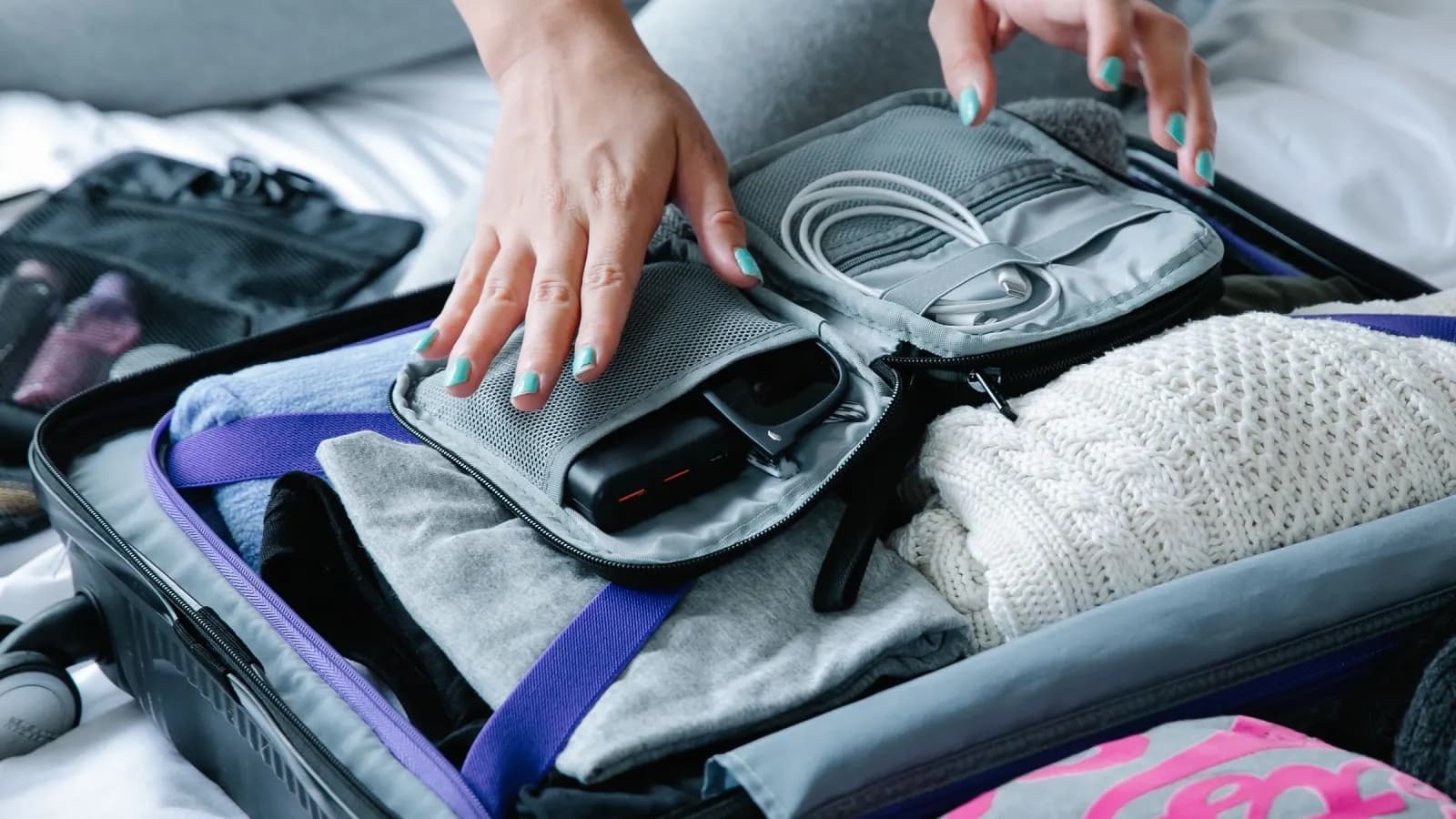
Pack the items that protect the journey first: travel documents, required health records, regular medicines, suitable clothing, a working phone, charging equipment and offline copies of bookings. Everything else should earn its place by solving a likely problem without making the luggage hard to move.
This checklist separates carry-on essentials from checked luggage and flags the religious, medical, airline and rail questions that need a qualified or official source. It is part of the practical Umrah guide.
The first ten items to pack
- Passport and required entry documents
- Flight, hotel and intercity transport confirmations
- Current vaccination or health records required for the traveler
- Regular medicines in original packaging
- A clinician's summary for important conditions or prescriptions
- Phone, charging cable and approved power bank
- Written Makkah and Madinah hotel addresses
- Appropriate clothing and the items required for your religious practice
- Comfortable, permitted footwear and a simple bag for daily essentials
- Protected offline copies of documents and group contacts
Keep the first eight accessible during the journey. A perfectly organized checked suitcase is no help if the airline delays it.
Documents and official checks
Create one travel-document folder for the original items and one protected offline copy. The exact entry and permit requirements depend on the traveler and can change.
Check and pack as applicable:
- Passport with the validity required for the journey
- Visa or other entry authorization
- Return or onward flight details
- Makkah and Madinah hotel confirmations
- Haramain, coach or vehicle bookings
- Nusuk confirmations required for the trip
- Travel-insurance certificate and assistance number
- Current vaccination certificates and health records
- Prescription or clinician letter for controlled or important medicine
- Emergency contacts and consular details
Use the official Nusuk information, Saudi visa route provided for your nationality, the Ministry of Hajj and Umrah guide and the Saudi Ministry of Health as current sources. Do not rely on an old checklist for a live entry requirement.
Make copies useful, not exposed
- Store a protected copy on the phone for offline access.
- Keep a second protected copy with a trusted traveler or secure account.
- Print the hotel address and one emergency contact.
- Avoid leaving passport images in an open photo album or public shared link.
- Do not post boarding passes, visas or booking barcodes on social media.
Current health-requirement check
Saudi Arabia's Ministry of Health publishes a dedicated Umrah health-requirements document. The current 1447H (2026) version says all people intending to perform Umrah need an accepted meningococcal ACYW vaccination before travel. It also sets additional polio, yellow-fever and COVID-19 requirements for specified countries or health groups.
That summary was checked on July 27, 2026. Requirements can change and the details include vaccine type, timing, traveler group and country conditions. Read the live document, check the Ministry pilgrim-health page, and speak with a qualified health professional early enough to act. This article is not medical advice.
The same official document recommends that travelers with chronic conditions carry a description of the condition and enough medicine in original packaging. Ask the clinician how to transport, store and time the medicine across flights and time-zone changes.
Personal health pouch
Pack only products that are appropriate for the traveler and permitted by the airline and Saudi rules. A useful pouch may include:
- Regular medicine in original labeled packaging
- Prescription or clinician documentation
- Required vaccination record
- Small first-aid supplies chosen with professional advice
- Face masks and hand-cleaning supplies
- Oral-care and personal-hygiene items
- A refillable water bottle when empty containers are permitted through security
- Medical identification for an important condition where advised
Do not place all essential medicine in checked baggage. Confirm cabin rules for liquids, needles, refrigerated products and batteries before the flight.
Clothing and religious items
Choose simple, comfortable clothing for the weather, walking, indoor air conditioning and laundry available on the itinerary. Pack enough to manage a delayed bag or a change of plan without carrying a wardrobe between cities.
For religious clothing and ihram requirements, follow a trusted qualified scholar or group leader. The correct preparation can depend on the traveler, route and point at which ihram is entered. A generic packing article should not make that ruling for you.
Practical clothing considerations include:
- Required ihram garments or modest clothing prepared according to trusted guidance
- One spare set in case an item is damaged or delayed
- Light everyday clothes for hotel and travel time
- A warmer layer for strong indoor air conditioning or a cooler season
- Sleepwear and undergarments
- Comfortable footwear suited to repeated walking
- A simple footwear bag
- Laundry bag and a small amount of permitted laundry supply
- Sun protection appropriate for the traveler
If fragrance-free products matter for your religious practice, confirm the rule and check every label. "Unscented" and "fragrance-free" are not always used in the same way by manufacturers.
Toiletries without the full bathroom cabinet
Use travel-sized items that meet cabin-liquid rules or place larger containers in checked baggage. Consider what can be bought after arrival instead of carrying duplicates for a long trip.
- Toothbrush and toothpaste
- Soap, shampoo and skin care that fit the traveler's needs
- Comb or brush
- Personal menstrual products where needed
- Nail and grooming items packed according to aviation-security rules
- Small towel or quick-dry cloth if useful
- Tissues and sealable bags
- Laundry supplies for the planned washing method
Keep liquids in a leak-resistant bag. Do not pack prohibited blades or sharp tools in cabin baggage.
Technology and phone kit
The phone supports bookings, maps, translation and group contact, so pack its recovery plan as carefully as the device.
- Unlocked phone that supports the chosen Roaming eSIM
- Protective case and screen lock
- Charging cable and reliable wall charger
- Correct plug adapter for Saudi Arabia
- Airline-compliant power bank carried in the cabin
- Spare cable shared across the family if devices use the same connector
- Earphones for private calls and audio guidance
- Roaming eSIM installation and support instructions saved offline
- Offline maps around both hotels
- Downloaded Arabic translation language
- Protected copies of tickets and addresses
Check the airline's live power-bank capacity and packing rules. Spare lithium batteries and power banks generally belong in cabin baggage, but the airline is the source for the flight you take.
Use the Umrah apps guide to test Nusuk, rail, maps, translation and ride options. Estimate the data allowance with the calculator in the Umrah internet guide.
What stays in your carry-on
| Carry-on priority | Why it stays with you |
|---|---|
| Passport and entry documents | Needed throughout the airport journey |
| Essential medicine and documentation | Checked baggage can be delayed or inaccessible |
| Phone, charger and power bank | Needed for bookings, contact and arrival transport |
| One clothing change | Useful after delay, spill or lost baggage |
| Hotel address and first-transfer details | Needed immediately after landing |
| Nusuk and rail confirmations | Important bookings should not exist only in email |
| Valuables | Keep control of irreplaceable items |
| Small hygiene kit within security rules | Supports a long or delayed journey |
Keep carry-on weight manageable. The person carrying documents should not also be overloaded with several other bags.
Checked luggage and Haramain limits
Airline baggage and railway baggage are separate contracts. A bag accepted on the flight may be too large for the Haramain train.
Haramain currently publishes one large bag per passenger up to 25 kg and no larger than 65 by 55 by 35 cm, plus permitted hand luggage. This was reviewed on July 27, 2026. Recheck the official rail baggage page before the city transfer.
If the itinerary uses the train, measure and weigh for the strictest planned carrier. Do not wait until Makkah checkout to solve excess baggage.
Packing for a family or older traveler
Assign items to people, not only suitcases.
- Put a hotel contact card in every traveler's pocket or day bag.
- Keep each person's medicine with that person or responsible carer.
- Carry a short health summary where professionally advised.
- Label luggage with contact information that does not expose a full home address.
- Pack one change of clothing for each person in cabin baggage.
- Confirm wheelchairs and assistance separately with the airline, rail operator and hotels.
- Bring familiar charging cables and avoid making one phone the only source of bookings.
- Use smaller bags if no one can safely lift the largest case.
The Jeddah airport to Makkah guide compares transfer choices with luggage and mobility in mind. The Makkah to Madinah transport guide covers the same questions for the city change.
Leave these decisions until you verify the rules
- A medicine that may be restricted or need documentation
- A power bank that exceeds the airline's limit
- Liquids or sharp tools intended for cabin baggage
- Food, plant or animal products with import restrictions
- Large water containers or bulky duplicate toiletries
- Religious products chosen from an unverified list
- A bag that exceeds the railway dimensions
When unsure, ask the airline, Saudi authority, railway, clinician or qualified religious adviser responsible for that rule.
Night-before packing check
- Put passport and travel documents in the designated bag.
- Confirm every regular medicine is packed and accessible.
- Charge phones and power banks.
- Download airline, hotel and rail confirmations.
- Recheck the arrival terminal and first transfer.
- Test Nusuk sign-in and the group chat.
- Save Makkah and Madinah hotel addresses offline.
- Confirm the Roaming eSIM installation or activation step.
- Weigh and measure luggage for every carrier on the route.
- Photograph the closed bags for identification.
Next: place the luggage inside the journey
Use the Umrah itinerary chapter to decide which hotel and transport day each bag must survive. Recheck the Jeddah arrival chapter and Makkah to Madinah journey before closing the case.
Frequently asked questions about packing for Umrah
What should be in an Umrah carry-on?
Keep travel documents, required health records, essential medicine, phone, charger, approved power bank, first-transfer details, one clothing change and offline bookings in the cabin bag.
How many clothes should I take?
Base the number on trip length, weather, laundry access and luggage limits. A smaller rotation with a realistic laundry plan is often easier than moving many outfits between Makkah and Madinah.
Should medicine go in checked luggage?
Do not put all essential medicine in checked baggage. Ask a clinician and the airline how to carry, document and store the specific product, especially liquids, needles, refrigeration or controlled medicine.
Do I need a vaccination certificate?
The current Saudi 2026 Umrah document includes vaccination requirements for all pilgrims and additional conditions for some origins or health groups. Read the live Ministry of Health document and obtain professional advice for your circumstances.
Can I carry a power bank?
Check the operating airline's current rule. Power banks normally need to travel in cabin baggage and capacity restrictions apply. Do not pack one in checked luggage without verifying the rule.
What are the Haramain luggage rules?
The current published limit is one large bag up to 25 kg and 65 by 55 by 35 cm per traveler, plus permitted hand luggage. Recheck when booking.
Should I take a physical SIM tool?
Only if the phone and plan require it. A Roaming eSIM avoids swapping the home SIM on a compatible unlocked phone, but save the installation instructions and keep the phone charged.
What should I print if everything is on my phone?
At minimum, print or write the hotel addresses, key contacts, first-transfer details and essential health information. The phone may be unavailable when those details are most needed.